engraver
Corbié
(active 1824 – 1886)
  
Don Herbison-Evans
(donherbisonevans@yahoo.com)
and
Stella Crossley

Corbié was a highly prolific 19th-century French master copperplate engraver and scientific illustrator based in Paris. His studio changed addresses over the decades, moving from the Rue Serpente in 1839 to the Rue de la Harpe by 1862. Print records reveal that Madame Corbié worked closely alongside him in the studio, managing a team of professional colorists, hand-painting the printed black-and-white plates with watercolors to match the natural hues of the insect or bird specimens. Because his career spans over 60 years (1824–1886), historians suspect the workshop may have eventually transitioned from father to son under the same professional name.

Because 19th-century trade logs treated reproductive engravers as commercial technical artisans rather than academic scholars, his full first name and precise birth/death dates are omitted from official scientific biographies. He is almost universally cited in old academic catalogs as "M. Corbié" (Monsieur Corbié) or simply "Corbié". Despite the lack of personal records, his high technical standing is proven by the landmark texts he was trusted to engrave.

Corbié was a major plate-cutter, working with Clergé, for several of the foundational volumes of the Suites à Buffon atlases, and other natural history series, including

  • Histoire Naturelle des Insectes: Aptères (1837-1857) (spiders and wingless insects) by Baron Walckenaer,

  • Histoire Naturelle des Crustacés (1834-1840) by Henri Milne-Edwards.

  • Voyage au Gabon: Histoire Naturelle des Insectes et des Arachnides (1856–1857) by James Thomson: for which Corbié worked alongside Clergé to engrave the complex exotic beetle and lepidoptera plates.

  • Histoire Naturelle des Zoophytes: Acalèphes (1843) by René-Primevère Lesson:
    this extended Corbié's range beyond insects to other complex anatomical subjects: engraving the microscopic details of the jellyfish and radiarians.

  • Les pigeons de volière et de colombier (1824),
    Corbié co-authored and illustrated this alongside naturalist Pierre Boitard. This book featured highly praised detailed engravings of domestic pigeon breeds and was so accurate that it was later acquired and used as a source text by Charles Darwin while researching his 'Variation of Animals and Plants Under Domestication'.

  • Histoire Naturelle des Insectes; Spécies Général des Lépidoptères by Jean Alphonse Boisduval & Achille Guenée.

    Corbié and Clergé were employed by Boisduval & Guenée to engrave Blanchard's drawing in 1857 for late volumes in this latter publication. Previously, up to 1852, Boisduval & Guenée had employed Pierre Barrois to do the engravings for earlier volumes. But by 1857, Barrois was aged 69 and had retired.
    Also for the later volumes: Boisduval & Guenée switched from using the older printing presses at Narcisse Rémond to the more modern equipment at F. Chardon Imprimerie.

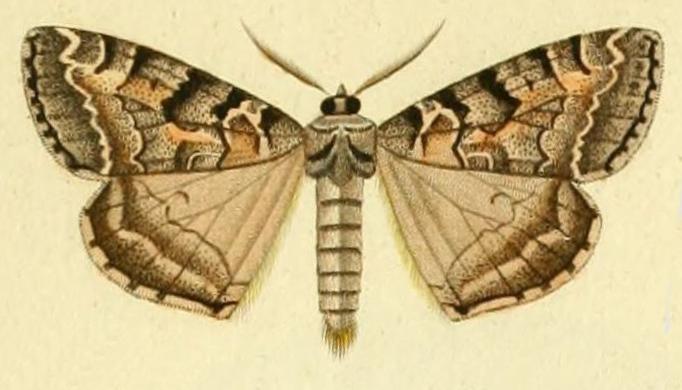
    Copies of illustration in this website engraved by Corbié for Guenée:-


    Synemon parthenoides
    drawn by Poujade,

    Amelora sparsularia
    drawn by Charles Blanchard,

    Chlenias auctaria
    drawn by Charles Blanchard,

    Mnesampela privata
    drawn by Charles Blanchard,

    Paralaea beggaria
    drawn by Charles Blanchard,

    Smyriodes aplectaria
    drawn by Charles Blanchard,


    Australian
    Australian Butterflies
    butterflies
    Australian
    home
    Lepidoptera
    Lepidoptera
    home
    artists
    Australian
    Australian Moths
    moths

    (written 27 October 2026, updated 5 November 2026)